
Next generation polycarbonate data page


ID security solutions, protecting your biodata
In a passport, the primary target for counterfeit attacks is the passport data page, which contains the holder’s passport data page information. To safeguard this critical personal and biometric data, secure and sophisticated identity components are essential. Whether through the use of a durable substrate such as polycarbonate, or the application of holographic laminates or patches on paper-based data pages, these security features help protect against unauthorized alteration of genuine holder details.
To address these challenges, Crane Authentication has developed a dedicated solution designed to protect the most critical elements of modern identity documents.
Explorer: the polycarbonate data page
Designed to meet the highest security standards, the Explorer polycarbonate data page integrates next-generation authentication features, cutting-edge durability, and innovative design, delivering superior protection for passport information pages and polycarbonate ID cards.
Polycarbonate identity cards and passport data pages are engineered with advanced, tamper-resistant features that offer robust protection against counterfeiting, fraud, and identity theft. These documents incorporate proven security elements, including Diffractive Optically Variable Image Devices (DOVIDs), security printing, and Optically Variable Ink (OVI), alongside cutting-edge innovations such as secure complex windows, metallisation (hidden portrait) and interlaced security threads, introducing new challenges for counterfeiters.
Each feature is deeply embedded and locked within into the polycarbonate structure significantly enhancing the document's security, whilst maintaining the enhanced durability that polycarbonate technology provides. When combined, these elements create a formidable defense against fraudulent manipulation, ensuring secure and reliable identity authentication.
Case study:
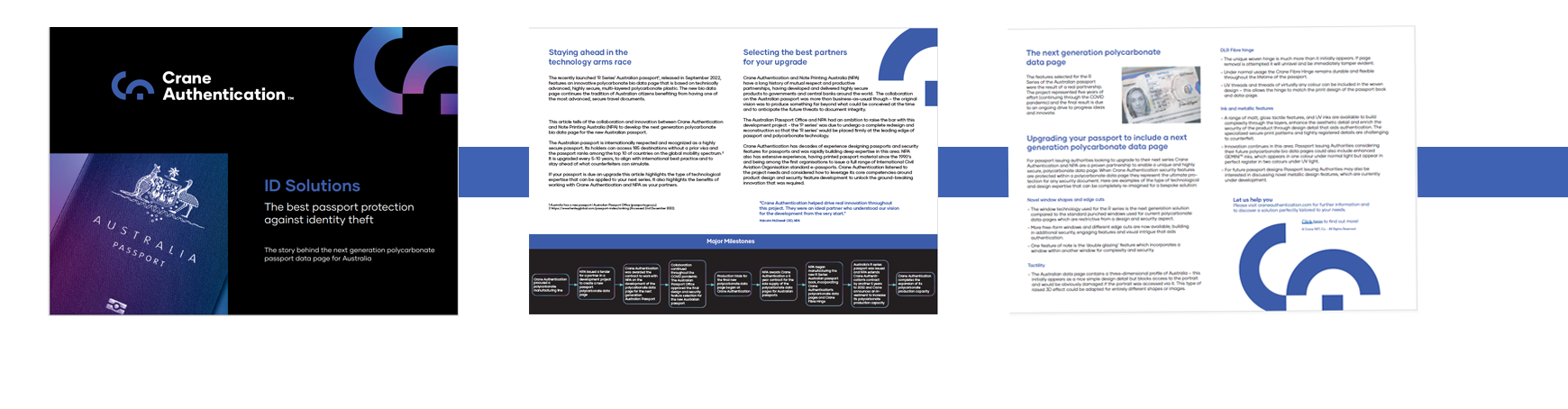
The Development of the Polycarbonate Passport Data Page for the New Australian Passport
This case study explores the collaboration between Crane Authentication and Note Printing Australia (NPA) to develop the next generation polycarbonate passport data page for the new Australian passport.
It highlights how joint innovation, advanced materials, and secure manufacturing techniques were brought together to enhance the durability and security of the passport data page, helping protect personal and biometric information against counterfeiting and fraud.
Fibre hinge
Polycarbonate data pages require a secure and durable hinge solution that enables them to be simply integrated into a passport book. The hinge protects against the potential threats of removal and replacement with counterfeited or forged pages without compromising the integrity of the polycarbonate monoblock construction.
The innovative patented Fibre Hinge technology offers a secure and durable solution that is also elegant and unique in appearance, allowing for design flexibility.
Multiple monofilaments form a complex interweave that renders it almost impossible to reattach a previously removed data page without revealing clear evidence of tampering. The data page attached via the Fibre Hinge also retains a 100% monoblock construction thus removing the vulnerability associated with delamination or splitting.

DLR woven thread
Designed to protect the front or back of the data page, a unique solution integrates a secure holographic thread within the polycarbonate construction. With expertise in thread design and development, a range of design and width options are available to enhance security.
Polycarbonate production takes place in a state-of-the-art facility that meets ISO14644 standards for controlled environments. With a world-class clean room and an automated process, this ensures the highest quality products while minimizing potential contamination.
Our advanced passport data page solution ensures multi-layered protection against the threat of counterfeit and fraud. Fused under immense heat and pressure, our polycarbonate design solution can incorporate a broad range of security components, including optically variable inks, holograms and tactile surface embossing.

Holographic laminates
The ICAO 9303 document specifications recommend a holographic element should be used to protect the data page of all passports to avoid counterfeit attack. This is because of the range and versatility of optical feature effects that holography can provide, from Fresnels to rainbow iridescence and kinetic animation to stereograms. The ability to combine these effects across HRI and metalized areas ensure that the data behind the hologram remains protected but can still be easily authenticated
A global leader in secure classical ‘rainbow’ holography since the early 1990s, our capabilities and processes have continuously evolved to meet the changing needs of the market. By combining design and effects-based imaging, a direct-write holographic imaging platform has been developed, enabling new, distinguished effects with higher brightness—ideal for use in transparent holographic laminates found in most passports.
Security print and Gemini™
Security print remains a crucial element of all highly secure ID documents. The ability to combine beautiful design with extremely secure elements in the print is an art form in itself and requires a unique skillset, from design through to manufacturing. Gemini™, our specialist print security feature, appears as a single colors under normal daylight but transforms into two separate fluorescent colors when under UV light. Gemini™ enhances the overall security of the token by increasing the complexity of design as a defence against any attempted reproduction or counterfeit of the feature. It is quick to authenticate by trained users and border control inspectors when viewed under a UV light source.
Highly suitable for use across a variety of identity documents and especially effective when used in conjunction with other features on the biodata page, observation page and / or end pages of a passport as these are the areas that are typically under the greatest threat of attack.

Contact us
Speak with our experts about secure ID documents and polycarbonate data page solutions.