Blog: Consumer and Industrial
Addressing multiple brand protection challenges in apparel: how authentication and traceability work together

Physical authentication remains a cornerstone of brand protection – but counterfeiting is not the only challenge the apparel sector faces.
Brand protection in apparel is now inherently phygital. While garments still move through intricate physical supply chains, additional complexity often emerges after production as authentic products appear across a growing mix of physical and online channels.
In this climate, visible authenticity remains vital. Increasingly, it is reinforced by digital traceability to address a broader set of brand protection challenges.
What physical authentication delivers
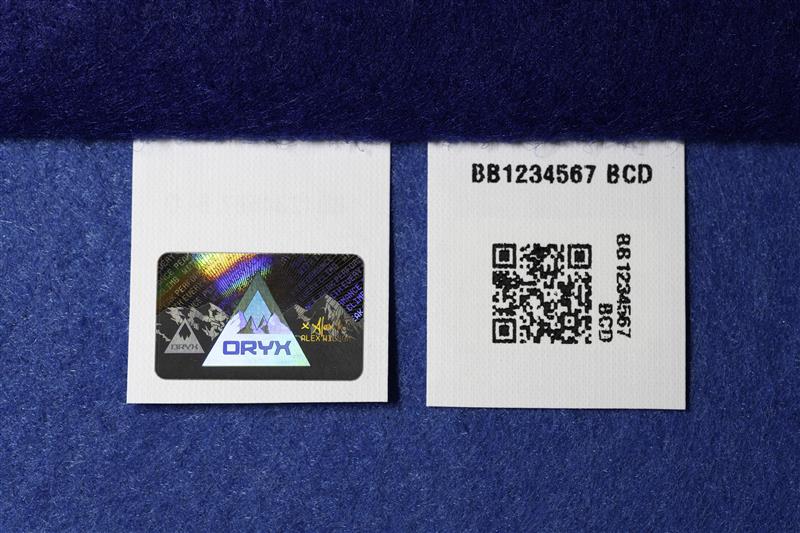
Overt authentication excels at providing instant visual recognition. Solutions such as PROFOUND® secure labels and holograms combine multilayered security with strong visual impact, making genuine products easy to recognize and extremely difficult to replicate.
PROFOUND® labels deliver striking 3D animations and are fully customizable, allowing brands to integrate authentication into their design identity. PROFOUND® TruSpectrum™ further enhances recognition by delivering brand-accurate color within secure labels.
Together, these solutions help apparel companies:
- Provide trust at a glance by making authentic products instantly recognizable
- Reinforce brand identity and help genuine products stand out on the shelf
- Protect revenue and reputation by making products extremely hard to replicate
As in other industries, overt authentication remains a critical line of defense against counterfeiting in apparel.

Fake products are not the only threat
Counterfeiting remains a primary concern, but it is far from the only challenge. As supply chains scale and distribution networks fragment, it becomes more difficult to ensure that products are sold across intended channels and regions.
In sectors like apparel, rising production volumes and rapid trend cycles can amplify this challenge, making it harder to maintain consistent oversight once products leave the factory.
At scale, authentic garments may surface outside intended geographies, channels, or seller environments – creating commercial and operational complications even when products are genuine.
Diversion vs grey-market activity
As apparel supply chains scale, brands typically face two distinct challenges:
- Diversion – genuine products are stolen, misrouted, or redirected from the manufacturer’s intended destination or channel.
- Grey-market activity – genuine products are resold outside authorized distribution frameworks, often across borders or via unauthorized sellers.
Although both involve authentic goods, they can undermine pricing strategy, channel integrity, and brand control. Here, the challenge is not proving authenticity but understanding whether products are moving through intended channels and regions.
Of course, these threats are not unique to apparel but are often more visible in any sector operating globally at high volume and speed.
Fighting diversion and unauthorized sales
When authentic products appear outside intended channels or regions, the impact can be both commercial and operational.
Unauthorized sales can erode margins, dilute brand value, and disrupt partner relationships. They can also introduce compliance risk, where genuine products surface in regions with different regulatory requirements than those for which they were intended.
To identify diversion and grey-market activity, brands need visibility that confirms not just that a product is genuine, but how it reaches the market. This is where overt authentication benefits from reinforcement with traceability.
Crucially, authentication confirms that a product is genuine, while traceability confirms where it belongs.
How traceability complements overt authentication
Item-level traceability builds on overt authentication by enabling brands to monitor individual product journeys. By assigning a unique digital identity to each product, brands can link PROFOUND® secure labels or holograms to a verified product history.
This visibility helps brands:
- Detect diversion by spotting anomalies in product journeys
- Identify grey-market activity when genuine products surface outside intended regions or channels
- Strengthen supply chain control and enhance insight into channel and distribution behavior
Traceability also supports apparel’s growing focus on circularity. Verified product histories can be reused to support ESG reporting and sustainability claims, helping brands evidence provenance, manufacturing practices, and ethical production.
Delivering consumer authentication and engagement
With OpSec InSight®, consumers can authenticate products by scanning a secure QR code on a hangtag or label, verifying the item’s unique digital identity.
That same scan can open a brand-controlled engagement experience, supporting:
- Sustainability information and impact details
- Cross-sells and tailored promotions
- Repair or resale programs
This builds trust at the point of interaction while enabling brands to personalize purchasing experiences and forge direct customer connections.
The benefits of a combined approach
Overt physical authentication and digital traceability address different challenges – and reinforce each other.
- Overt authentication supports product integrity, instant recognition, and consumer confidence
- Digital identity and traceability support visibility, supply chain integrity, and control across distribution channels
Together, they help apparel brands combat counterfeiting, diversion, and grey-market activity on a global scale.
In practice, this integration can start at the label itself. Secure labels or hangtags can be produced with unique identifiers from the outset, delivering authentication and item-level traceability in a single solution.
Creating a more resilient foundation
Ultimately, brands should not replace overt authentication. But they can reinforce it as part of a modern, scalable brand protection strategy.
By combining PROFOUND® secure labels or holograms with digital traceability through OpSec InSight®, brands can protect products from counterfeiting and diversion while gaining deeper visibility across increasingly complex supply and value chains.
Together, physical authentication and digital traceability create a more resilient foundation – helping apparel brands safeguard revenue, strengthen control, and protect brand value in a phygital world.
Ready to explore more?
Contact us to learn how OpSec InSight® combines with PROFOUND® and holograms to enhance brand protection strategies in the apparel industry.
From character to consumer, Crane Authentication empowers the industry.
Ready to elevate your brand’s potential? Contact Crane Authentication to discover how our solutions safeguard brand revenue and reputations.